Greatest Fictional Worlds Ever Created

Here are some of the fictional worlds that I really like.

1. Hogwarts from the Harry Potter series

Hogwarts School of Witchcraft and Wizardry is truly magical. The school itself feels sentient thanks to magic that moves staircases and statues that come to life. There are dark parts to Hogwarts like the murderous centaurs, Dementors, and others, but it can also be a place of comfort to those who dwell within.
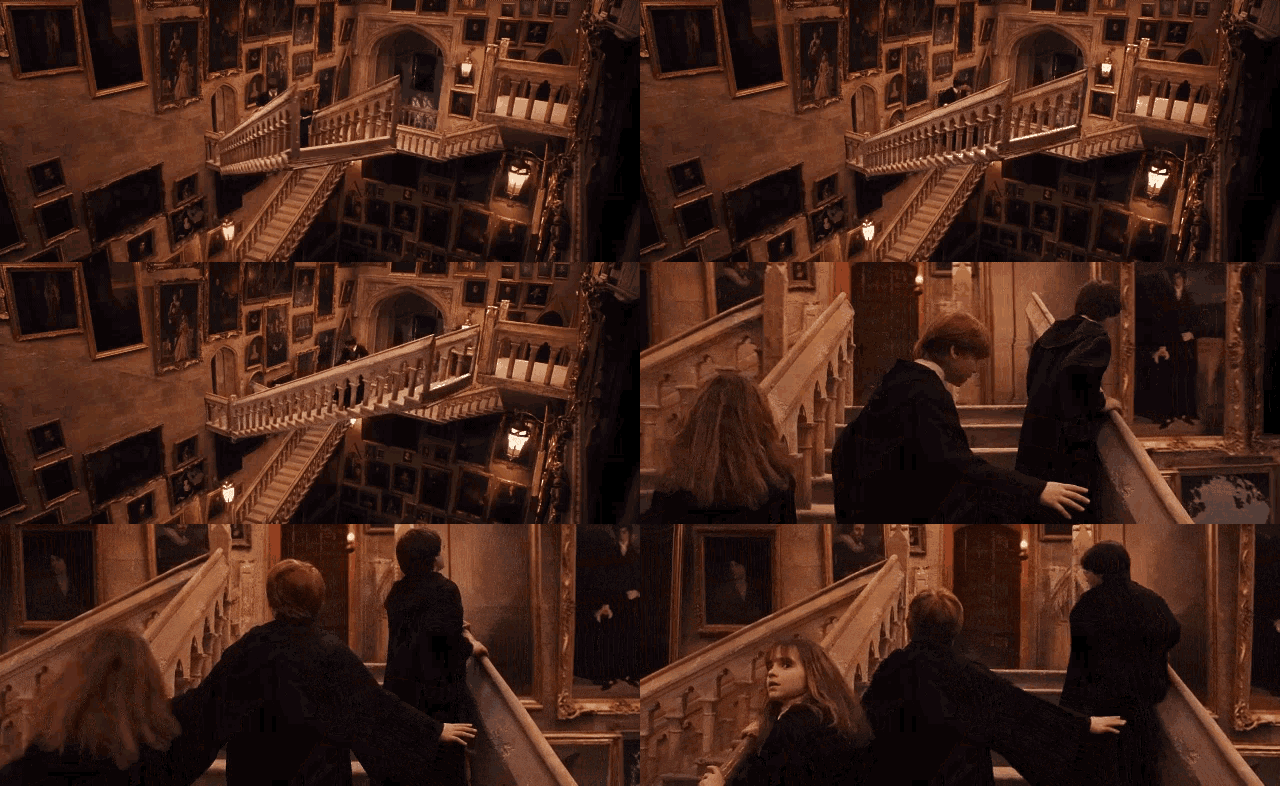
2. Narnia from The Chronicles of Narnia

An epic world with fantastic creatures and fierce battles between good and evil, Narnia has it all. Narnia has risen above the fantasy genre to find itself firmly lodged in classic literature. Narnia is a land where magic meets reality, one that has drawn in young and old alike over the past decades.

3. Westeros from A Game of Thrones

Regardless of the wildly popular television series, fans and non-fantasy-fiction fans alike love George R. R. Martin’s epic tales set in Westeros. However, Westeros is only one part of the entire fictional world created by Martin. Thanks to a firm grounding in historical lore, Westeros feels entirely real.
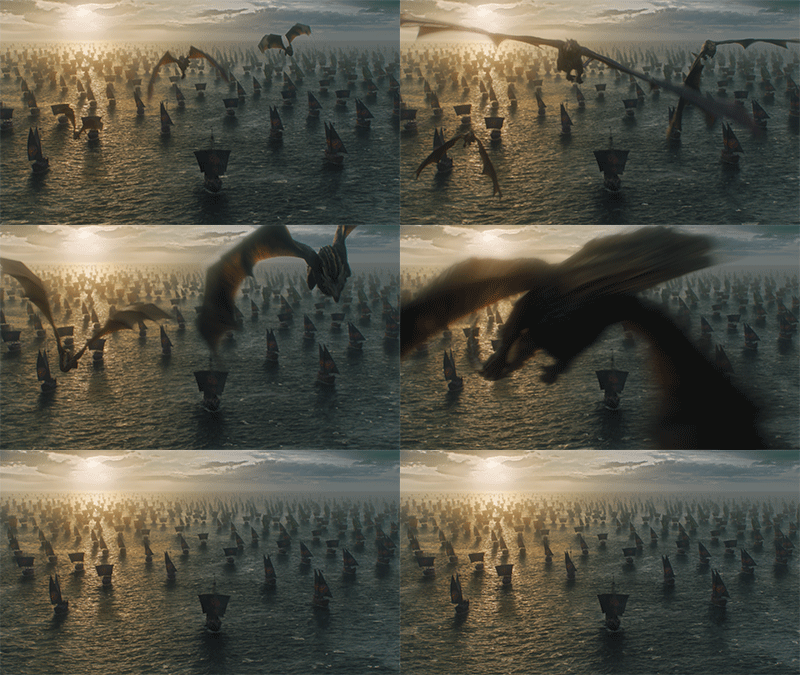
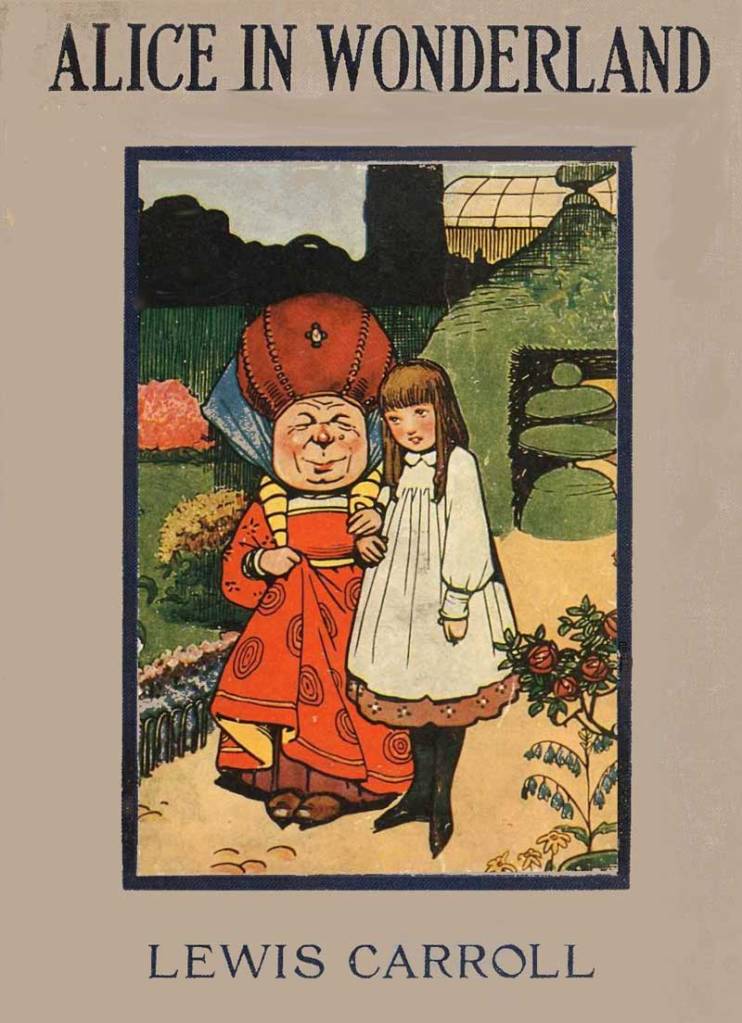
4. Wonderland from Alice’s Adventures in Wonderland

When young Alice tumbles down a rabbit hole, she enters an entirely different world where everything seems absurd and mind-bending. Talking animals, animated playing cards, and a tyrannical queen, one speculates if Wonderland is close to the center of the earth.
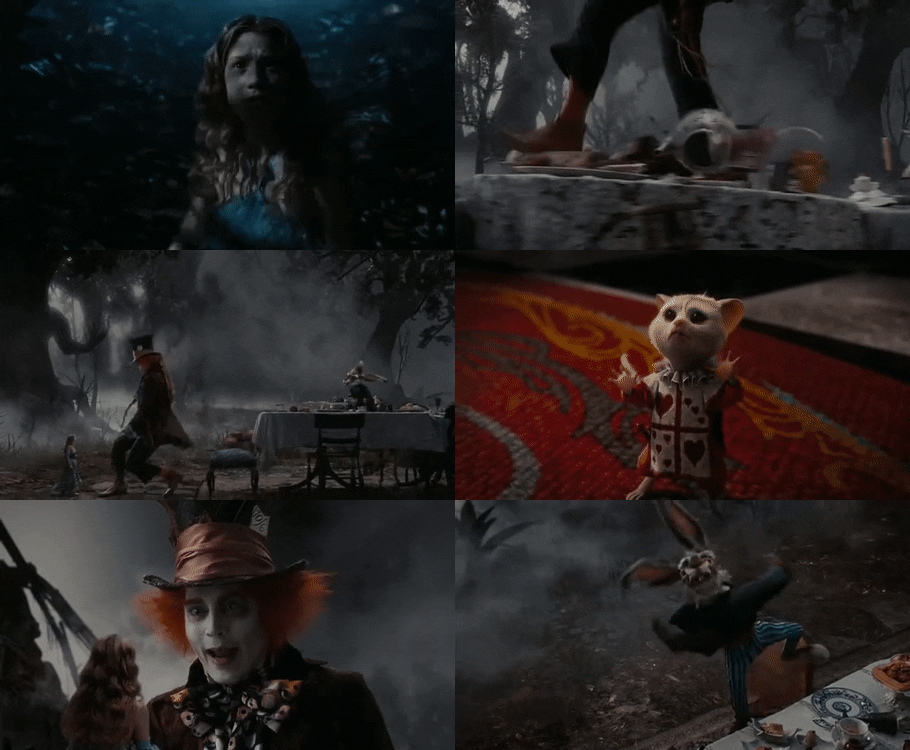
5. Panem from The Hunger Games trilogy

Panem is comprised of 13 districts and the Capitol. Run as a dictatorship, the Capitol is home to privileged groups of people. Despite the deprivation of many districts, Panem is incredibly advanced. Their technological capabilities far surpass the real world. Some examples of this include futuristic weaponry, transportation, and the arena in which the Hunger Games competitors fight in.
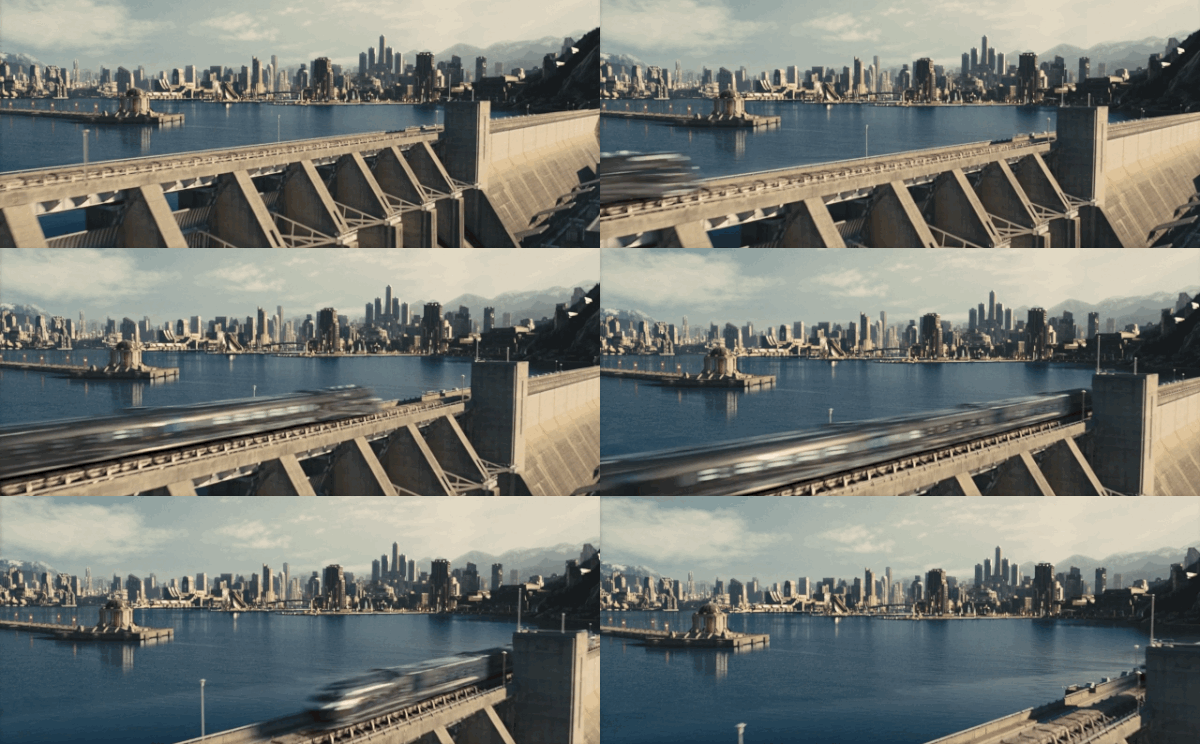
Fiction Writing

What Is Fiction?

A work of fiction is created in the imagination of its author. The author invents the story and makes up the characters, the plot or storyline, the dialogue and sometimes even the setting. A fictional work does not claim to tell a true story. Instead, it immerses us in experiences that we may never have in real life, introduces us to types of people we may never otherwise meet and takes us to places we may never visit in any other way. Fiction can inspire us, intrigue us, scare us and engage us in new ideas. It can help us see ourselves and our world in new and interesting ways. What’s more, it’s often just plain fun!

Examples of fiction in literature

1)  Alice in Wonderland  by Lewis Carrol

Alice in Wonderland by Lewis Carroll is a good example of fiction. The story narrates various adventures of the main character, Alice, in a fictitious land full of incredible creatures and events.

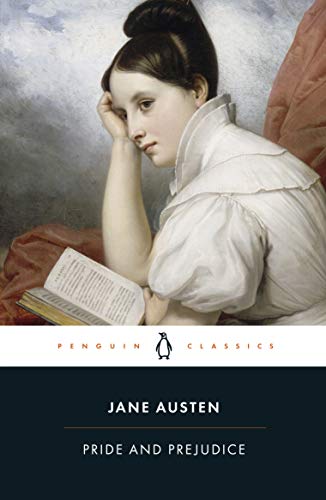
2) Pride and Prejudice by Jane Austen

Another example to portray fiction is Pride and Prejudice by Jane Austen. A classic of English literature, written with incisive wit and superb character depiction, it centres on the turbulent relationship between Elizabeth Bennet, the daughter of a country gentleman, and Fitzwilliam Darcy, a rich aristocratic landowner.


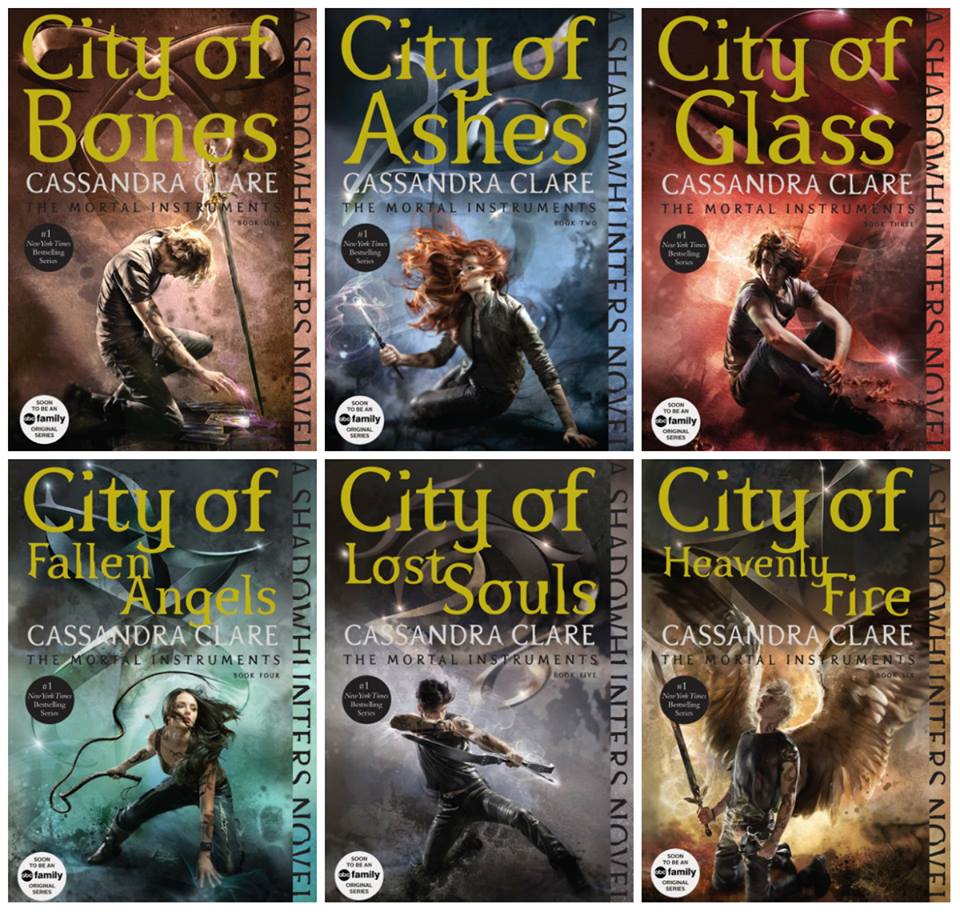
3) The Mortal Instruments by Cassandra Clare

This is yet another apt example of fiction. The Mortal Instruments is a series of six young adult fantasy books written by Cassandra Clare. It is set in contemporary New York City, a seemingly ordinary teenager, Clary Fray, discovers she is the descendant of a line of Shadowhunters, a secret cadre of young half-angel warriors locked in an ancient battle to protect our world from demons. After the disappearance of her mother, Clary must join forces with a group of Shadowhunters, who introduce her to a dangerous alternate New York called Downworld, filled with demons, warlocks, vampires, werewolves and other deadly creatures.

Function of Fiction

The function of fiction is to entertain, educate, and inspire the readers and the audience. Literature in general, and fiction in particular, is capable enough to sweep our emotions. Therefore, fiction gives the audience an experience beyond their daily lives.It is also used to point out the flaws and drawbacks of a society, race, and nation in a manner that it does not touch the boundary of stricture or criticism. Rather, fiction points out drawbacks, and then suggests solutions for the individuals and the nations alike. To sum up, fiction can also provide a vent to our pent-up emotions such as hatred, anger and dislike but in a very light manner without pointing out specific individuals or groups.

Importance of Reading

Reading is one of the most important and best habits one can inculcate. Those who have the habit of reading are actually the ones who can really understand the value and pleasure of reading. There are very few who are aware of the advantages of reading good books.

Importance of Good Reading Habits

Reading habits develop vivid imagination, knowledge and vocabulary. Here are some points describing importance of good reading habits:

The most important reason of reading is that we gain knowledge. Books are a rich source of information and knowledge. Reading books on diverse genres imparts information and gives you a deep insight of to the topic you read about. You always learn something new when you read.

It is a proven fact that those who have good reading habit show signs of higher intelligence. With diverse and bountiful genres books open up the mind and enhance the creative ability and language skills.

Reading fiction develops empathy and helps build better relations with others. You become a part of the story and naturally empathize and sympathize with characters. You become more aware about how people get affected in different situations. It enhances your overall ability to empathize with others.

Good reading also inspires you to write. Many writers get inspired and gain expertise by reading more and more. You learn the art of using language and enjoy playing with words.

Reading is also a kind of motivation that works wonders in when it comes to de-stressing. Reading motivational books can really change our life for better. Reading autobiographies can also encourage us to work hard and stay dedicated to achieve our goals. It helps us become a better person in life.

Conclusion

There are many perks of good reading habits. It keeps your mind active, strong and healthy. Reading is important for your overall personal growth and development. Besides, you never feel bored or lonely if you develop good reading habits.

Design a site like this with WordPress.com
Get started